
Digital Business Cards in Tanzania: The Complete Guide for 2026
First impressions increasingly happen on a phone. You might meet a prospective client at a Dar es Salaam conference, a supplier in Arusha, or a partner through WhatsApp. A digital business card gives that person one reliable place to find your contact details, understand what you do, and take the next step.
This guide explains what digital business cards are, how they work in Tanzania, and how to choose and use one without losing the personal touch that makes networking valuable.
What is a digital business card?
A digital business card is an online profile containing the information you would normally print on a card: your name, role, business, phone number, and email address. It can also include your website, location, social profiles, services, products, and a clear action such as “Call me” or “Request a quote.”
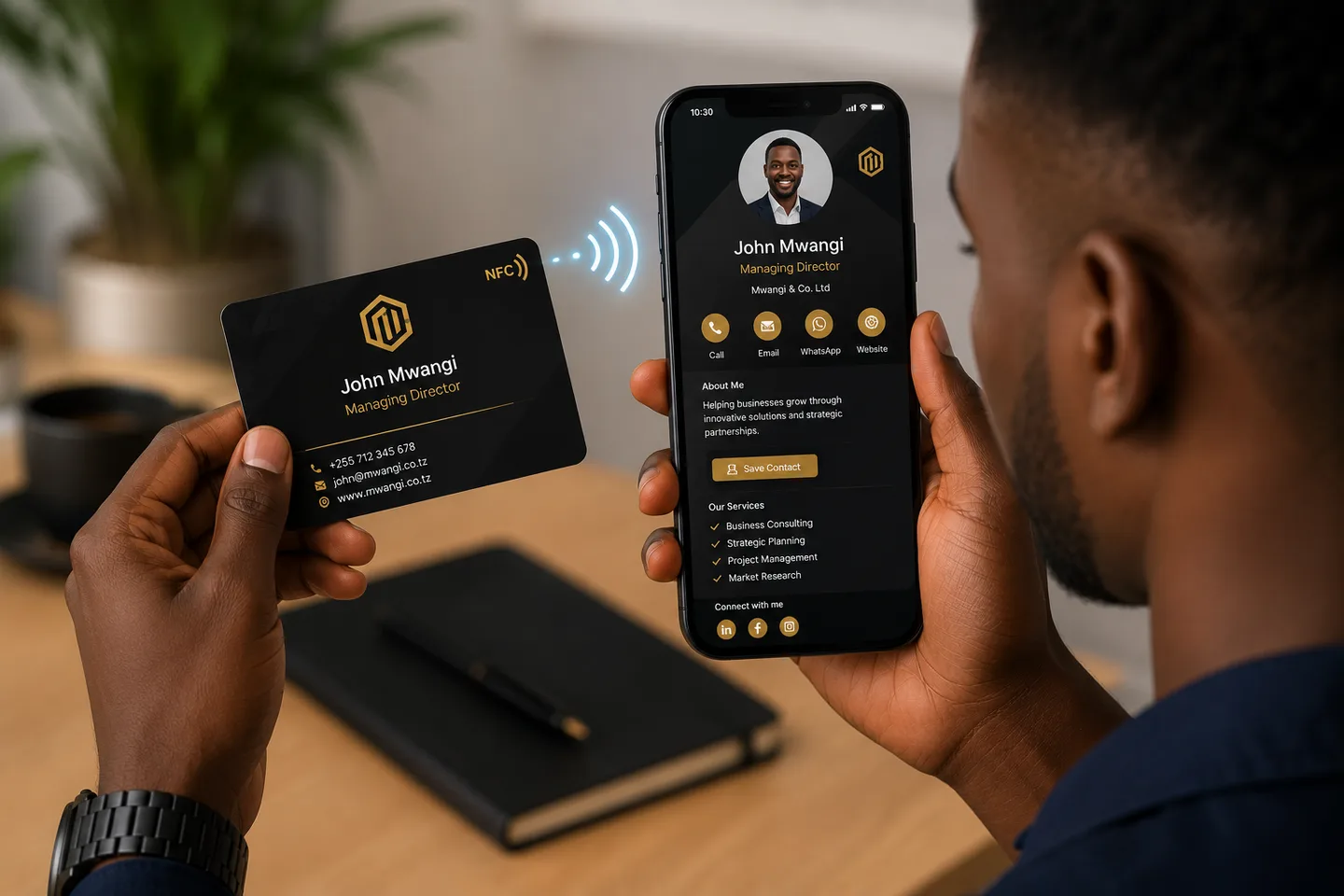
Instead of handing over paper alone, you share a link or QR code, or use an NFC-enabled card. The recipient opens your profile in a browser and can save your details to their phone. Your information remains editable, so a new phone number or job title does not require another print run.
Why digital business cards make sense in Tanzania
Tanzanian business relationships move across in-person meetings, phone calls, email, social platforms, and messaging apps. A digital card connects those channels rather than forcing a new contact to copy details from one place to another.
- Always available: your card stays on your phone, ready for a planned meeting or an unexpected introduction.
- Easy to update: change your role, office location, or service list without discarding printed stock.
- Simple to share remotely: send your link after a video call or in a professional WhatsApp follow-up.
- More useful than contact details alone: show a portfolio, catalogue, booking page, or directions to your premises.
- Consistent for teams: give staff a recognizable, managed business identity.
These advantages are relevant whether you run a small business in Mwanza, represent a company in Dodoma, or welcome visitors to Zanzibar. The goal is not technology for its own sake; it is making the next conversation easier.
Three ways to share your card
1. A direct link
Your card has a web address that you can send by email, SMS, WhatsApp, or social media. Links are ideal for remote introductions and email signatures. Keep the message personal and explain why you are sharing it.
2. A QR code
The other person scans your code with their phone camera. QR sharing works well at meetings, exhibitions, reception desks, and on printed material. Test the code at its final display size and in normal lighting.
3. An NFC tap
An NFC business card contains a small chip that opens your digital profile when tapped near a compatible phone. It feels similar to exchanging a traditional card, but the recipient receives an interactive profile. Keep a QR code or link available for phones or situations where tapping is not convenient. Our guide to NFC business cards in Tanzania explains the details.
What should your card include?
Start with the information a new contact needs to recognize and reach you. Add your full name, accurate job title, business name, phone number in international format, and a professional email address. Then choose only the extras that support your work.
A consultant may prioritize a short biography and booking link. A retailer may feature products and WhatsApp. A tour operator may highlight itineraries and inquiry options. Use a clear photo or logo, readable colours, and specific labels instead of a crowded collection of icons.
Do not publish confidential information or personal contact channels you do not want shared. Review your public profile as a visitor would.
How to choose a digital business card provider
Look beyond appearance. Check whether the platform lets you update content, share by link and QR code, save contacts, and present your business clearly on mobile. If you want an NFC card, confirm how it connects to your profile and whether the destination can be updated.
Compare plans using your actual needs: number of users, branding, lead capture, business profiles, support, and ongoing subscription costs. Wiverr’s digital business card features and current plans are useful starting points.
Test the complete experience on more than one phone. Can someone open the card quickly, read it comfortably, save your details, and contact you without instructions?
Using your card for better local networking
Make the digital card part of a thoughtful follow-up. After meeting someone, mention the topic you discussed and suggest one appropriate next action. A generic mass message wastes the advantage of an immediate connection.
Use natural language for your audience. English and Swahili labels can work well when they are concise and consistent. Add your city or service area when location matters, but avoid claiming coverage you do not provide.
For a step-by-step setup, read how to create a digital business card in Tanzania. You can also explore Wiverr’s digital business card solutions for Tanzania.
Frequently asked questions
Do digital business cards require an app?
A browser-based card can normally be opened through its link without the recipient installing an app. The card owner may use an account dashboard to edit and manage the profile.
Can I use one without mobile data?
Opening the online profile requires connectivity. At venues with unreliable internet, keep your QR code accessible offline and share your phone number directly when necessary.
Will a digital card replace paper completely?
It can, but it does not have to. Some professionals use a digital profile alongside a smaller supply of printed cards carrying the same QR code.
Is it suitable for a small business?
Yes. A focused card can help a small business look organized, explain its offer, and give customers an easy way to make contact. Start with essential details and improve the profile from real feedback.
A good digital business card is clear, current, and easy to act on. Create yours with a specific audience in mind, test every link, and use it to continue genuine conversations.