
Digital vs Paper Business Cards in Tanzania: Cost, Convenience and ROI
Should you print another box of business cards or switch to a digital one? For a Tanzanian professional, the practical answer depends on how often your details change, where you network, and what you want a new contact to do next.
Paper and digital cards can both make a good impression. Their costs and capabilities, however, are different. This comparison will help you evaluate them without assuming that the newest option is automatically the best for every situation.
What are you actually paying for?
A paper card’s price usually includes design, printing, finishing, and delivery. Premium card stock, special colours, and finishes can improve its feel but increase the quote. There is also a time cost: approving artwork, waiting for production, and collecting or arranging delivery.
A digital business card may involve a subscription, profile setup, and optionally a physical NFC card. Instead of paying primarily for copies, you pay for the online profile and its management features. Check what each plan includes and whether prices recur monthly, annually, or per user.
For a fair comparison, use actual supplier quotes in Tanzanian shillings and your real usage. Do not compare one premium printed card with the cheapest possible digital plan, or assume every digital feature is free.
Digital and paper cards side by side
| Factor | Paper business card | Digital business card |
|---|---|---|
| Sharing | Physical handover | Link, QR code, NFC, or physical handover |
| Updates | Usually requires a reprint | Edit the online profile |
| Capacity | Limited by card space | Room for services, media, and multiple actions |
| Remote networking | Requires a photo or separate message | Send the profile link directly |
| Recipient needs | No internet to read the printed details | Internet to open the online profile |
| Ongoing cost | Reprints and replacements | Plan fees and optional NFC hardware |
Where paper cards still work well
A printed card is immediate, tangible, and readable without a phone or internet connection. It can suit formal presentations, locations with poor connectivity, and contacts who prefer something physical. Thoughtful design and quality material can also communicate care.
Paper becomes less convenient when you run out, change roles, or need to include several links. A box ordered for a team can become outdated unevenly: one person changes departments while everyone else’s cards remain valid.
Where digital cards create more value
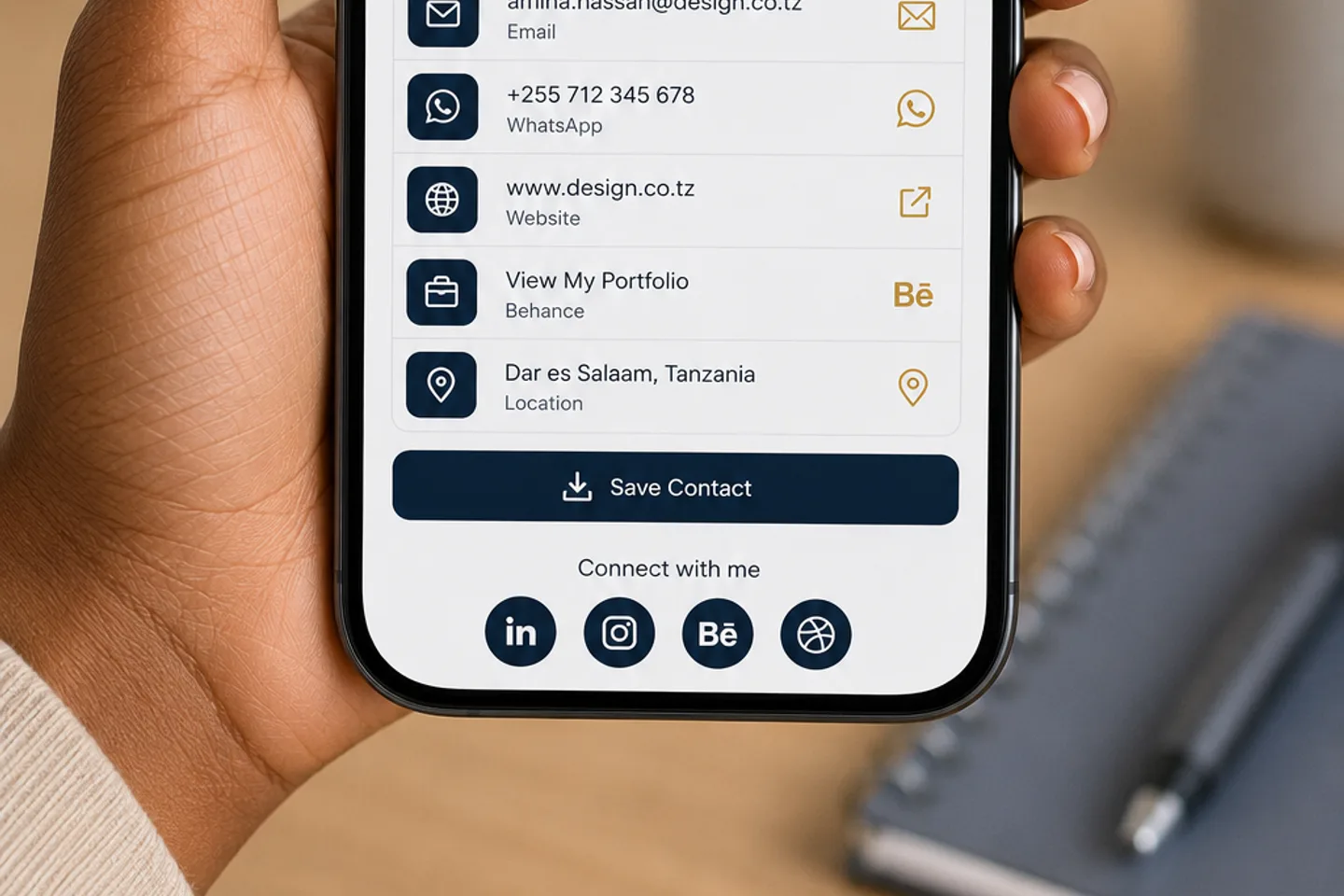
A digital profile can hold the details that do not fit on paper: a portfolio, product catalogue, map, introductory video, or appointment link. A new contact can move directly from introduction to action instead of typing your website address later.
Updates are another major difference. If your office moves within Dar es Salaam or your business adds a branch in Mbeya, you can revise the profile without throwing away old stock. Your link can also live in an email signature, WhatsApp introduction, proposal, or social profile.
For companies, centralized administration may improve consistency. Confirm the available roles and controls before choosing a team setup.
How to calculate business card ROI
Return on investment is not simply “money saved on printing.” Start with your annual networking cost:
Total card cost = design + printing or hardware + subscription + delivery + staff setup time.
Then track useful outcomes over the same period. Depending on your work, these may be qualified inquiries, booked appointments, saved contacts, catalogue visits, or completed sales attributable to card interactions. Use actual records rather than assuming every view has equal value.
A simple calculation is:
ROI percentage = (attributable return ? total card cost) ÷ total card cost × 100.
Attributing revenue can be difficult because a card is only one touchpoint. Record where inquiries came from, use appropriate tracking when available, and review trends rather than promising a fixed return. Time saved on reorders and fewer outdated details may matter even when direct revenue is hard to isolate.
A practical cost comparison for Tanzania
List how many cards each person uses in a year and how often details change. Request printing quotes for that volume, including transport. Then compare suitable digital business card plans, optional NFC cards, and expected renewal costs.
If you rarely network and your details are stable, a small print run may be sufficient. If you attend frequent meetings, share remotely, or update your offer often, a digital profile may offer greater convenience. Teams should calculate by active user, not just the company total.
Why a hybrid approach can make sense
You do not have to choose only one format. A printed card can carry a QR code that opens your fuller digital profile. An NFC card offers a physical handover while its destination remains editable. Your phone’s QR code can serve as a backup when you have no physical card.
This approach keeps the familiarity of paper while reducing dependence on printed information. Review the available Wiverr features to decide which combination fits your meetings and audience.
Frequently asked questions
Are digital business cards always cheaper?
Not automatically. Savings depend on print volumes, design choices, subscriptions, hardware, and how often you update details. Compare total costs over the same period.
Can people open a digital card without internet?
No, an online profile needs connectivity. Keep essential details available in another format when networking somewhere with unreliable service.
Do digital cards generate sales by themselves?
No. They make information and next steps easier to access, but results still depend on your offer, conversations, follow-up, and sales process.
Should a small business stop printing completely?
Only if that suits its customers. Many small businesses begin with a digital card and a QR code on existing signage, receipts, or a small supply of printed cards.
The right choice is the one your contacts can use comfortably and your business can maintain. For a broader introduction, read our guide to digital business cards in Tanzania.